
Ever stopped for a moment and truly listened to your own body? The steady beat of the heart, the effortless rhythm of your breath, the way your mind keeps weaving thoughts even in silence—none of these require conscious effort. They simply happen. And yet, we rarely pause to ask:
What is this body that works so tirelessly for us? Is it just a biological machine, or something far more sacred?
Ancient Indian philosophers believed the body is not only nature’s most advanced machine but also the temple where the soul resides. Science explains the mechanics of how it works, but philosophy reveals its deeper purpose—why we have been given this extraordinary gift.
To understand life in its fullness, we must explore the human body not only as a physical system but also as a spiritual bridge between the earthly and the eternal.

1. The Human Body as Nature’s Machine
The human body may look ordinary on the surface, but it is the most remarkable machine in existence. Unlike the machines we build, this one repairs itself, grows on its own, and adapts to every challenge life brings.
Our heart beats without asking, our lungs breathe without effort, and our mind carries us through endless thoughts and dreams. Every cell works in harmony, reminding us that this body is not just a tool for survival—it is a gift, a companion, and a bridge to something higher.
In truth, the body is a living miracle, created not just for existence, but for experience and evolution.
2. Ancient Indian Philosophy: The Body as a Vehicle
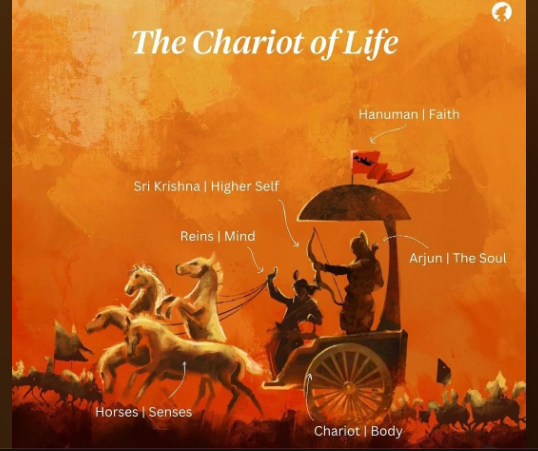
Indian sages described the body as a yantra (machine) or chariot.
The Katha Upanishad says:
- Body = Chariot
- Senses = Horses
- Mind = Reins
- Intellect = Charioteer
- Soul (Atman) = Passenger
If the senses run wild, life becomes chaotic. If intellect guides firmly, the soul’s journey becomes smooth.
The Bhagavad Gita further compares the body to clothing. Just as we change old garments, the soul changes bodies across lifetimes.
3. The Link Between Body and Soul
What connects this machine to the eternal soul? The answer lies in Prana—the vital life force.
- Breath as Energy: Each breath carries prana, the invisible energy that animates life.
- Mind as the Bridge: It translates the body’s signals and the soul’s light.
- Karma as Connection: The body is shaped by past actions, becoming the stage for karmic lessons.
Thus, the body is temporary, but the soul is eternal, and the two are inseparably linked.
4. Why the Body is Sacred
The body is far more than a biological system:
- A Temple of the Soul: Ancient texts call it Devalaya—the temple of God.
- Tool for Experience: Every joy, pain, and love is experienced through the body.
- Pathway to Liberation: Through yoga, meditation, and discipline, the body helps the soul realize its true nature.
5. Ayurveda Five Elements
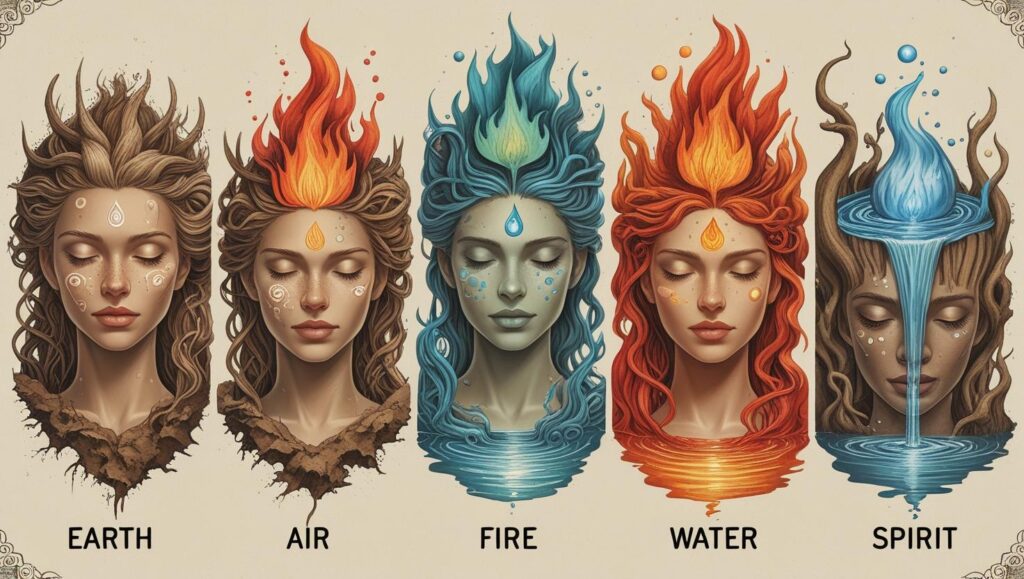
According to Ayurveda and Yoga, the body is built from five elements—earth, water, fire, air, and ether.
- Balance = health, harmony, clarity.
- Imbalance = disease and suffering.
Yoga, pranayama, and meditation are methods to keep this inner machine tuned.
6. The Final Realization
Science explains how the body works, but philosophy explains why it matters.
- Body = Advanced Machine
- Soul = Eternal Passenger
- Link = Prana and Karma
- Purpose = Awakening
When body and soul align, life transforms from survival into a sacred journey.
Conclusion – A Bridge Between Earth and Eternity
The human body is more than a biological system; it is a bridge between matter and spirit. It is temporary, yet it holds the eternal.
To honor life, we must care for this body—not only for health but also as a way of respecting the soul within. Because when body and soul walk in harmony, life becomes a sacred adventure toward truth and liberation.